E-ISSN : 3063-1351
∴ MENUS ∴
∴ SUBMISSION ∴
∴ JOURNAL TEMPLATE ∴
![]() |
![]() |
∴ INFORMATION ∴
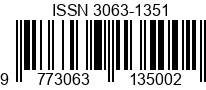
∴ ISSN BARCODE ∴
![]() |
∴ INDEXING ∴
![]() |
![]() |
∴ TOOLS ∴
![]() |
![]() |
![]() |
![]() |
∴ STATISTIC ∴
∴ MEMBER ∴

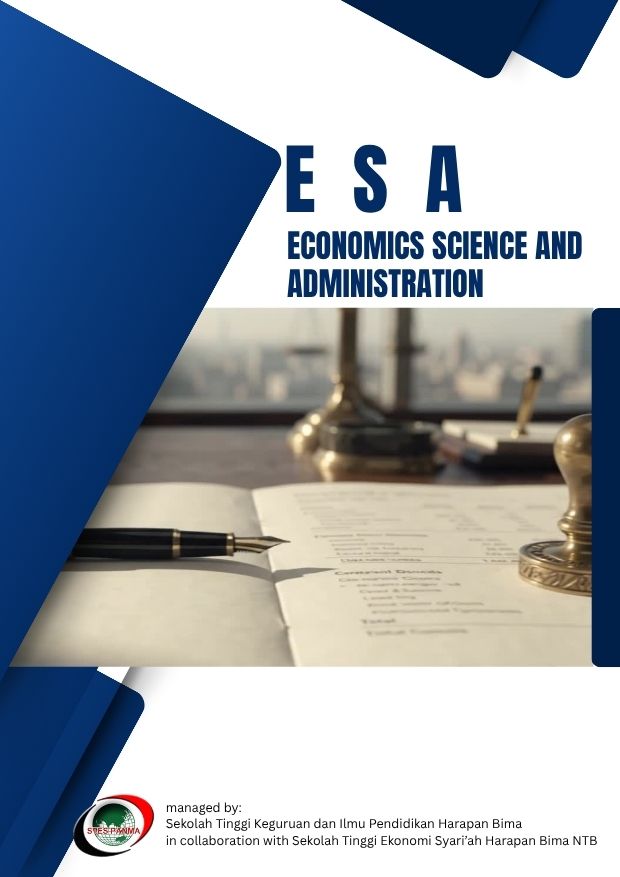
Economics Science and Administration
Frequency: 2 issues per year
1. Purpose
The Journal Economics Science and Administration (ESA) (e-ISSN: 3063-1351), published biannually by Sekolah Tinggi Keguruan dan Ilmu Pendidikan (STKIP) Harapan Bima NTB in collaboration with Sekolah Tinggi Ekonomi Syari’ah (STES) Harapan Bima NTB under the leadership of Editor-in-Chief Suhartanto, S.E, S.Pd., S.Kom, M.A.P., recognizes that scientific inquiry and peer dialogue do not conclude at the point of publication. Post-publication discussion provides a vital platform for researchers, academics, practitioners, and readers to comment on published articles, clarify theoretical constructs, probe methodological frameworks, and contribute constructively to the advancement of economics, business, and administration. The journal actively encourages rigorous, evidence-based, and courteous academic discourse designed to bolster scientific integrity, foster intellectual transparency, and refine scholarly practice.
2. Scope of Post-Publication Discussion
Post-publication communications directed to the Journal Economics Science and Administration may explore diverse substantive elements of published works, including the interpretation of economic outcomes, theoretical implications, econometric validity, statistical robustness, data analytical accuracy, and overall research conclusions. Readers may also present relevant empirical datasets or literature reviews that expand, enrich, or challenge published perspectives, identify inadvertent computational or typographical errors, raise legitimate concerns regarding research ethics, or delineate broader economic, business, or public policy ramifications. All submissions must center directly upon the published manuscript under consideration, demonstrating relevance, intellectual grounding, and verifiable scholarly reasoning.
3. Submission of Comments and Responses
Readers seeking to engage in critical discourse regarding an article published in the Journal Economics Science and Administration may submit a formal scholarly commentary or Letter to the Editor through the journal's official editorial management portal or designated correspondence channels. Submissions must clearly cite the targeted article's bibliographic information and its persistent Crossref DOI (https://doi.org/10.56842), summarize the primary analytical or methodological arguments, and incorporate supporting references and empirical verification. Comments must remain concise, intellectually objective, respectful, and strictly focused on scholarly elements. Upon editorial validation of a commentary, the original authors will be invited to draft a formal response; when appropriate, both the critical commentary and the author's response will be published simultaneously to present a balanced, comprehensive perspective to the global scientific community.
4. Editorial Assessment
The Editor-in-Chief or an assigned Section Editor evaluates all submitted commentaries and author rejoinders to ensure scientific rigor, relevance, professional tone, and compliance with ethical standards. The editorial desk reserves the right to subject post-publication submissions to external peer review or consult independent disciplinary specialists. The journal may mandate structural revisions, request supplementary data clarifications, or dismiss submissions that fall short of academic standards. Any commentary containing personal animosity, unsupported accusations, defamatory language, or irrelevant polemics will be summarily rejected without further review.
5. Responsibilities of Authors and Commentators
Commentators submitting post-publication critiques bear direct responsibility for ensuring the veracity, factual accuracy, and evidential backing of their assertions. They must explicitly disclose any competing financial, professional, or institutional interests and refrain from presenting mischaracterized summaries of the original paper. Correspondingly, original authors responding to scholarly critiques are expected to address the raised academic questions constructively and professionally, presenting further empirical clarification, raw dataset validations, or necessary retractions. All participating scholars must uphold academic freedom, exhibit professional integrity, and observe the Committee on Publication Ethics (COPE) core practices.
6. Corrections, Expressions of Concern, and Retractions
When post-publication discussions uncover credible computational errors, methodological discrepancies, or severe ethical infringements, the editorial board initiates appropriate corrective procedures. Depending on the gravity and impact of the verified issue on the reliability of the published findings, the journal will issue an Erratum/Corrigendum, publish an Expression of Concern, or enact a formal Retraction in full harmony with COPE flowcharts. A critique or post-publication query alone does not constitute proof of invalidity or scientific misconduct; all corrective determinations follow an impartial, evidence-based investigation independent of external pressures.
7. Transparency and Accessibility
Whenever a post-publication critique or author reply is accepted for publication, the journal guarantees permanent public accessibility by linking the commentary directly to the original article’s landing page via mutual Crossref DOI indexing. The exchange is integrated into the journal's digital preservation infrastructure, including the Public Knowledge Project Preservation Network (PKP PN), LOCKSS, and CLOCKSS. A complete editorial and correspondence record of the proceeding is maintained within the journal archive, managed under strict privacy and confidentiality protocols.
8. Ethical Standards
All post-publication interactions within the journal must abide by rigorous ethical principles. The journal maintains zero tolerance toward plagiarized commentaries, fabricated statistical comparisons, falsified data, ad hominem attacks, or bad-faith misrepresentations. Submissions that raise verifiable concerns regarding research malpractice, such as data fabrication, systematic plagiarism, or unauthorized duplicate publication, will immediately be redirected for processing under the journal's formalized Policy on Allegations of Research Misconduct.
9. Commitment to Scholarly Dialogue
The Journal Economics Science and Administration (ESA), STKIP Harapan Bima NTB, and STES Harapan Bima NTB remain firmly committed to facilitating transparent, ethical, and collaborative post-publication discussion. By managing scholarly discourse with equity, academic accountability, and prompt corrective mechanisms, the journal ensures that its contributions to economics, business, and administration continuously maintain the highest benchmarks of empirical veracity and public trust.
Summary Information:
Journal Name: Journal Economics Science and Administration (ESA)
Publisher: Sekolah Tinggi Keguruan dan Ilmu Pendidikan (STKIP) Harapan Bima NTB in collaboration with Sekolah Tinggi Ekonomi Syari’ah (STES) Harapan Bima NTB
Editor-in-Chief: Suhartanto, S.E, S.Pd., S.Kom, M.A.P.
Identifiers: e-ISSN: 3063-1351 | DOI Prefix: 10.56842
Policy Purpose: To regulate post-publication academic commentary, author responses, and scholarly debate to ensure the continuous refinement and reliability of published literature in economics and administration.
E-ISSN : 3063-1351
∴ MENUS ∴
∴ SUBMISSION ∴
∴ JOURNAL TEMPLATE ∴
![]() |
![]() |
∴ INFORMATION ∴
∴ ISSN BARCODE ∴
![]() |
∴ INDEXING ∴
![]() |
![]() |
∴ TOOLS ∴
![]() |
![]() |
![]() |
![]() |
∴ STATISTIC ∴
∴ MEMBER ∴

Economics Science and Administration
Frequency: 2 issues per year